Redefining "Unique Corporate Entertainment": Why a Close-Up Show and Strolling Cocktail Hour Magic Are the Interactive Catalyst Your Event Actually Needs
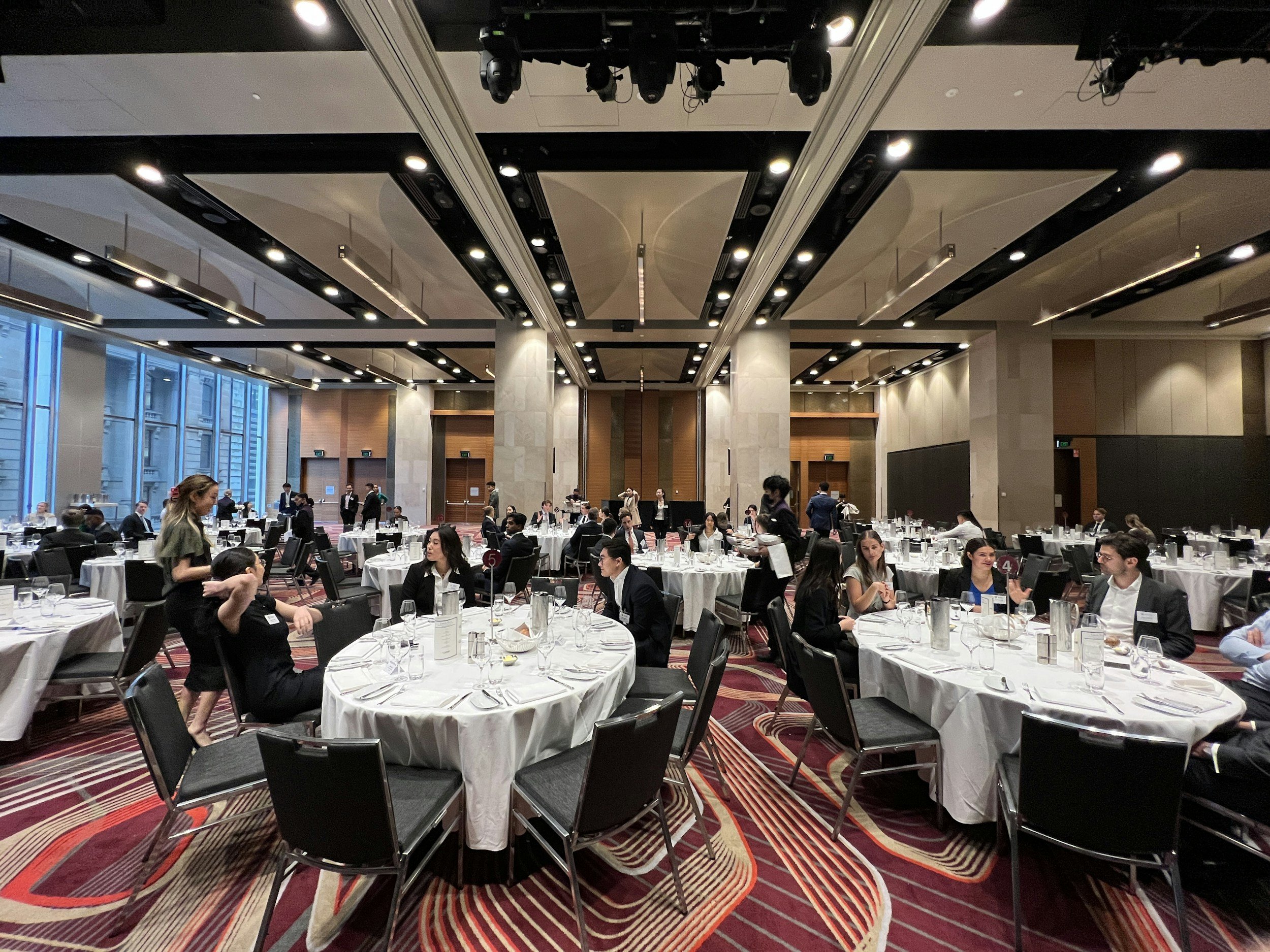
Every corporate planner has typed some version of "unique corporate entertainment" into a search bar at 11 p.m., scrolling through the same short list of bands, DJs, photo booths, and stage acts that every other company in Los Angeles has already booked twice. The problem isn't a lack of options. It's that most of what qualifies as "entertainment" in the corporate space is still passive: attendees watch, they don't participate, and the room's energy never actually becomes their energy. True unique corporate entertainment does the opposite. It puts the experience directly into your guests' hands, engages their thinking in real time, and turns strangers at a cocktail table into a shared moment they're still discussing on the drive home. That's the specific gap a sophisticated close-up show and strolling, cocktail hour magic both fill, and it's why more executive committees are building one or both formats into the program instead of defaulting to the standard lineup.
The Real Problem With "Standard" Corporate Entertainment
Most corporate entertainment options share the same structural flaw: they're built for an audience, not for participants. A band performs at the room. A photo booth exists at the edge of it. Even a well-produced stage show, for all its polish, still asks guests to sit back and observe rather than actively engage. None of that is wrong, exactly. It's just predictable, and predictable is precisely what a room full of executives, clients, and high-performing employees has already seen a dozen times over.
What's missing is entertainment that requires the room's attention rather than simply requesting it. That's where a close-up show, or its cocktail hour counterpart, strolling magic, changes the equation entirely.
What Makes Close-Up and Strolling Magic a Genuine Category Shift
A close-up show or a strolling, mix-and-mingle performance by Christopher Moro isn't a scaled-down version of a stage act. Both are a fundamentally different discipline, built around proximity, real objects, and real-time reaction rather than distance and spectacle. Whether guests are seated at a table or circulating with a drink in hand during the reception, a borrowed object behaves in a way it has no business behaving, inches from the very hands that were just holding it. A thought gets named before anyone says it out loud. The audience isn't a crowd watching a performance; it's a small circle of people actively trying to solve something they can't quite explain, together, in real time.
That's the intellectual catalyst corporate planners are increasingly asking for by name, even when they don't yet have the vocabulary for it. It's not about being fooled. It's about the specific, shared mental exercise of trying to figure out how something impossible just happened in your own hands, alongside colleagues you may have only just met.
"People remember the exact second they couldn't explain what just happened in their own hands, and turned to whoever was standing next to them to try to make sense of it together. That's the moment I build every close-up and strolling show around." — Christopher Moro
Why This Matters More at Corporate Events Specifically
Corporate rooms carry a particular kind of social friction that private parties don't. Executives are networking, not just socializing. Clients are being quietly evaluated by the company hosting them. New hires are trying to figure out where they fit in the org chart's unspoken hierarchy. A magician for corporate events who understands that dynamic isn't just performing effects; he's engineering the fastest possible path from professional distance to genuine rapport.
A close-up show and a strolling cocktail hour experience both do this with almost no downside risk. The material is clean, intelligent, and built for professional audiences: no innuendo, no audience member positioned as the punchline, no material that requires a second thought before it's approved for a room with the CEO in it. Guests brought in to participate are made to look sharp, not silly, which is precisely why senior leadership tends to remember the moment fondly rather than warily.
These formats also solve a logistics problem most corporate planners are quietly worried about: dead time. Strolling magic is purpose-built for exactly that stretch, moving from cluster to cluster during the cocktail hour, the pre-dinner gap, or the awkward twenty minutes before a keynote, filling that time with genuine engagement instead of guests standing around checking their phones. A seated close-up performance solves the same problem later in the evening, once the room has settled at tables and the moment calls for something more intimate.
An Intellectual Catalyst, Not a Distraction
The strongest case for close-up and strolling magic as unique corporate entertainment is that neither competes with the substance of your event; both reinforce it. A well-designed corporate program is trying to build connection, sharpen morale, and leave a positive final impression of the company that hosted the night. A close-up performance or a strolling cocktail hour show accomplishes all three at once, using nothing but ordinary objects and a guest's own attention. For deeper detail on what actually separates sophisticated adult entertainment from the rest of the market, the vetting criteria matter just as much as the format itself; not every performer working in this space is calibrated for an executive room.
And for planners weighing close-up work against a full stage program for a larger gathering, it's worth understanding how close-up magic functions at a corporate reception</a> specifically, since the two formats are built for different moments on the same itinerary rather than competing for the same slot.
Frequently Asked Questions
What actually counts as unique corporate entertainment in 2026? Entertainment that requires active participation from guests rather than passive viewing. A close-up show and strolling cocktail hour magic both qualify specifically because the "performance" happens in a guest's own hands, not at a distance from them.
Is a close-up show or strolling magic appropriate for a formal corporate audience? Yes. The material is clean, intelligent, and built specifically for professional rooms. Comedy is collaborative, never at a guest's expense, and participants are positioned as the highlight of the moment rather than a target.
How is a magician for corporate events different from a general entertainer? A magician who works corporate events regularly understands the specific social dynamics of the room, networking pressure, client evaluation, executive presence, and designs the experience around easing that friction rather than ignoring it.
Can a close-up show or strolling magic work alongside other entertainment we've already booked? Yes. Both formats are modular by design. Strolling magic is typically placed during cocktail hours and networking receptions, while a seated close-up show fits naturally once guests are at their tables, making either easy to layer alongside a DJ, band, or stage program without competing for the same moment.
How far in advance should we book unique corporate entertainment like this? A few weeks of notice offers the most flexibility, particularly during gala and holiday seasons, though last-minute inquiries are always worth submitting if a date is still open.
Request Corporate Availability
Corporate calendars fill quickly during gala and holiday seasons. Share your event details to see how a close-up show or strolling cocktail hour magic from Christopher Moro fits your program.
About Christopher Moro
Christopher Moro is a Magician Member of the Academy of Magical Arts, based at the historic Magic Castle in Hollywood, California, admitted through formal audition and peer interview. He also holds a first-place award in stage magic. Based in the Burbank Media District, he performs close-up magic, strolling entertainment, and stage programs for corporate and private events across Los Angeles and Southern California. A graduate of the USC School of Cinema-Television, he went on to write, direct, and produce independent films, and he brings that same sense of pacing and structure to every show he presents.